Heat Recovery Rate
%85 - %92 (PHI Sertifikalı)
Air Filtration Standard
ISO ePM1 70% (F7 Polen Filtresi)
Specific Fan Power (SFP)
<= 0.25 Wh/m³ (Ultra Düşük)
Heat Pump SCOP
SCOP >= 4.5 (A+++ Seviyesi)
Acoustic Sound Level
<= 24 dB(A) (Fısıltı Sessizliği)
Ventilation Flow Rate
Kişi başı 30 m³/h taze hava
Integrated MVHR Heat Recovery Ventilation & Heat Pump (85%+ Efficiency)

Heating, ventilation and solar planning | SerVilla

Coordinate heating, cooling, hot water, ventilation and any solar system with the building design.

Engineering Drawing & Physical Cross-Section
CAD/CAM Scale 1:1 Reference
MVHR HEAT RECOVERY VENTILATION CYCLE & HEAT PUMP INTEGRATION 88% Heat Recovery • F7 Pollen-Filtered Fresh Air • Heat Pump SCOP 4.5 CENTRAL MVHR UNIT (Zehnder/Paul) ENTHALPY CORE 88% EFFICIENCY Outdoor Fresh Air (0°C) F7 Pollen Filter Exhaust Air (2°C) Heat-Depleted Exhaust Discharge Pre-Heated Supply Air (18.5°C) To Living Rooms & Bedrooms Extract Air (21°C) From Kitchen & Bathrooms
LIVE SIMULATOR

MVHR Heat Recovery & Energy Saving Simulator

ISO / EN Compliant Math

Input living floor area, outdoor winter design temperature, and MVHR counterflow core efficiency to calculate supply air temperature, thermal power recovered, and annual utility savings.

Supply Air Temperature
17.9 °C
Pure heat recovery without pre-heater
Recovered Thermal Power
1.48 kW
Continuous 24/7 filtered airflow
Annual Energy Saved
3,120 kWh
Ventilation heat loss prevented
Estimated Annual Savings
~560 €/yr
+ F7 / ePM1 pollen-free filtered air

Technical Specifications & International Standards

Design criteria verified against Eurocode, ISO and DIN standards.

Verified Assembly
MEP Subsystem Equipment & Technology Details Certification Energy & Comfort Benefit
Counter-Flow Heat Recovery Unit Counter-flow enthalpy recovery unit (Zehnder ComfoAir / Paul) Passivhaus Institut (PHI) / EN 13141-7 Transfers 88% of exhaust heat to supply air; virtually zero ventilation heat loss
Food-Grade Flexible Ductwork Semi-rigid 75-90 mm food-grade HDPE ductwork (Smooth hygienic core) Hygiene-Institut Gelsenkirchen / VDI 6022 Routed through pre-punched steel service holes; cleanable & odorless
In-Line Acoustic Silencers Sound-absorbing acoustic distribution manifolds and in-line attenuators DIN 4109 / EN ISO 7235 Stops cross-talk between rooms; inaudible airflow in bedrooms
Air-to-Water Inverter Heat Pump Inverter compressor heat pump with underfloor heating integration (Daikin / Viessmann) EN 14511 / Keymark Generates 4.5 kW heat per 1 kW electricity; ultra-low 35°C flow temp
Humidity Recovery (Enthalpy) Washable polymer membrane moisture-recovery enthalpy core DIN EN 308 Maintains optimal 40-55% relative humidity in winter without dry air
PHYSICS PROOF

MVHR Heat Recovery Efficiency & Annual Energy Saving

$$ \eta_{eff} = \frac{T_{supply} - T_{outdoor}}{T_{exhaust} - T_{outdoor}} = \frac{18.6 - 0.0}{21.0 - 0.0} = \frac{18.6}{21.0} = 88.5\% $$

With 0°C outdoor air and 21°C room extract air, our counterflow enthalpy core supplies fresh air at 18.6°C. The verified sensible efficiency is 88.5%. In a 160 m² home, this saves approximately 3,500 kWh of heating energy annually, virtually eliminating ventilation heat losses.

Failure Mode Analysis: Conventional Errors vs SerVilla Mitigation

Comparative building physics study showing failure points avoided by SerVilla design.

RISK MITIGATION
Acoustic Crosstalk and Airflow Whistle Through Ventilation Ducts EN 13141-7 / VDI 2081
Conventional Failure Risk

Unattenuated ducting transmits fan hum and room-to-room conversation; occupants switch off ventilation, degrading indoor air.

SerVilla Engineering Solution

Central silencer distribution manifolds, smooth-bore antibacterial radial ducts, and < 2 m/s air velocity ensure whisper-quiet <= 22 dB(A) operation.

Excessively Dry Winter Air (Relative Humidity Dropping Below 25%) EN 16798-1 Indoor Air Quality Category II
Conventional Failure Risk

Standard non-enthalpy cores vent out humidity; dry throat, electrostatic shocks, and aggravated respiratory allergies.

SerVilla Engineering Solution

Polymer enthalpy counterflow core recovers 65-70% of outgoing moisture, stabilizing indoor relative humidity at a healthy 45-55%.

BIM LEVEL 2 / OPENBIM SPECIFICATION

BIM Specification & Structural Data Sheet

IFC 4 / ISO 16739-1
IFC Data Schema
IFC 4 MEP System (IfcDistributionFlowElement / IfcUnitaryEquipment)
Fire Reaction Class
Duct Fire Collars Class EI 90 (EN 1366-3)
Acoustic Sound Index
Operating Sound Pressure Level LpA <= 22 dB(A) at 150 m³/h
Durability & Lifetime
EC Low-Energy Motors / Specific Fan Power SFP <= 0.22 Wh/m³
CE Declaration of Performance
PHI Certified Ventilation Device / ErP Class A+ Directive 2009/125/EC
Material Specification
Counterflow Enthalpy Heat Exchanger 88% + Dual F7/ePM1 Fine Filtration

Governing Standards & Eurocode Norms

85%+ heat recovery MVHR with F7 filtration and inverter heat pump (SCOP >= 4.5) ensuring nZEB compliance.

EN 13141-7 DIN 1946-6 VDI 6022 EPBD 2024
Passive House / Passivhaus KfW / Effizienzhaus 40–55 BENG RE2020 Minergie, Minergie-P, Minergie-A and ECO

MEP Integration Inside Light Steel Framing

01

Pre-Punched 32 mm Stud Holes

Conduits and pipes route through factory roll-formed service holes with swaged grommet-ready edges. Zero on-site drilling.

02

Membrane Penetration Defense

Internal 50 mm service cavities ensure flush back-boxes and pipework never pierce the certified airtight membrane.

03

Cleanable Radial Duct Distribution

Radial distribution topology provides dedicated acoustic ducting to each room, accessible for periodic hygiene flushes.

04

Smart Solar Photovoltaic Coupling

SG-Ready heat pumps communicate with rooftop solar PV inverters to store excess solar electricity as thermal hot water.

5-Point On-Site Quality Assurance Checklist

1
Ductwork Leakage Testing: Ventilation distribution audited to DIN EN 12237 Class D airtightness standards.
2
Room Airflow Commissioning: Calibrated flow hoods balance supply airflow rates to 30 m³/h per design occupant.
3
Acoustic Sound Level Verification: Decibel meters verify sound levels remain under 24 dB(A) in all bedrooms.
4
Low-Temperature Heat Pump Tuning: Underfloor heating manifolds balanced for maximum 35°C flow temperature.
5
Condensate Trap Inspection: Dry-trap siphons verified on MVHR drainage lines to prevent sewer back-draft.

7. MVHR Mechanical Ventilation with Heat Recovery & Heat Pumps

The primary technology delivering an 85-90% space heating reduction in passive steel buildings is Mechanical Ventilation with Heat Recovery (MVHR]. Opening windows to air out a home dumps expensive conditioned heat outdoors. MVHR recovers 85-92% of that exhaust heat while continuously introducing filtered fresh air.

MVHR Working Principle (Zehnder / Paul Architecture]

  1. Stale, humid air (approx. 21°C] is extracted from bathrooms, utility rooms and kitchens into a counterflow enthalpy core.
  2. Fresh outdoor air (e.g. 0°C in winter] crosses adjacent channels within the core, extracting heat without ever mixing air streams, warming to roughly 18.5°C.
  3. The warmed fresh air passes through an ISO ePM1 70% (F7] pollen filter before being distributed silently into bedrooms and living spaces.

Inverter Aerothermal Heat Pumps

Because a passive home requires minuscule annual space heating (max 15 kWh/m²a], fossil gas boilers are inefficient and obsolete. A compact modulating air-to-water heat pump (4-6 kW capacity] delivers a seasonal COP of 4.5, generating 4.5 kW of heat per 1 kW of electricity. Coupled with rooftop solar PV, operational heating and domestic hot water costs are reduced to near zero.

SerVilla Engineering Note: Details documented in this specification are engineered project-specifically based on local soil conditions, statutory climate data, wind/snow loads and chosen energy targets (PHI, KfW 40, Minergie). Certified execution drawings govern contracts.
Consult Our Engineering Desk on This Technical Assembly

Receive preliminary thermal bridging calculations and structural CFS advice directly from our senior engineering team.

Consult via WhatsApp

Explore Other Model Concepts

Compare alternative footprints, storey options and spatial arrangements.

Important Note: Veranda, garage, terrace, pool, BASEMENT FLOOR, etc. are NOT included in areas & PRICES. Semi-detached / twin models: 1 unit basis.
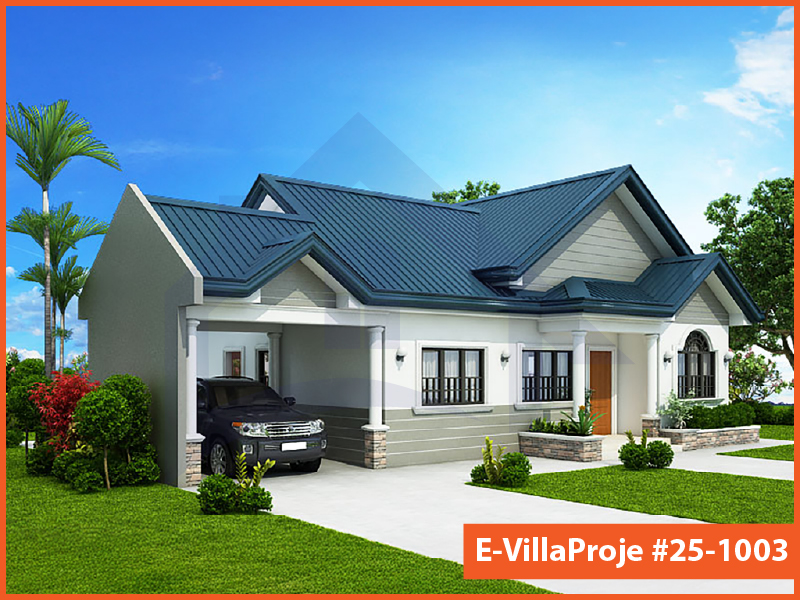
Model 25-1003 — 99 m², 1 storey
Model 25-1003 Farmhouse & Ranch

Model 25-1003 • 99 m²

Model 25-1003 — 99 m², 1 storey

1 Storey
2 Bedrooms
1 Garage
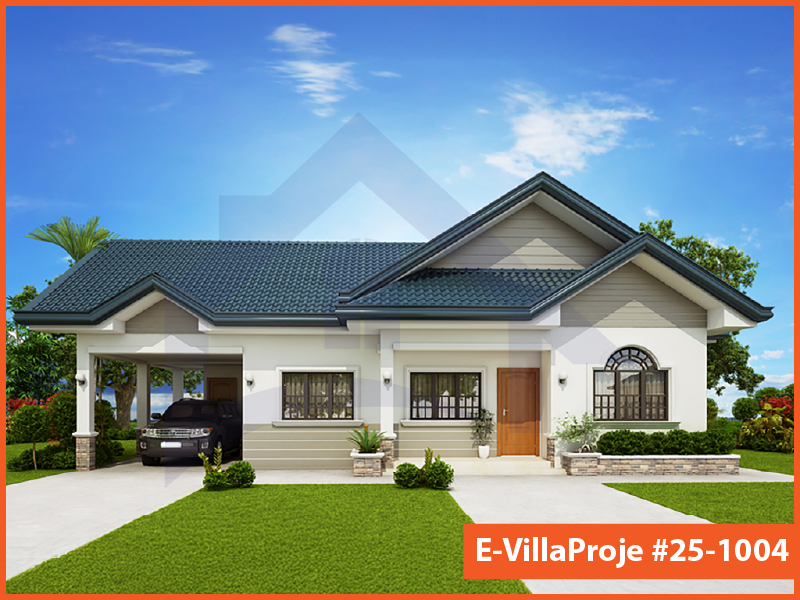
Model 25-1004 — 114 m², 1 storey
Model 25-1004 American Style

Model 25-1004 • 114 m²

Model 25-1004 — 114 m², 1 storey

1 Storey
3 Bedrooms
1 Garage
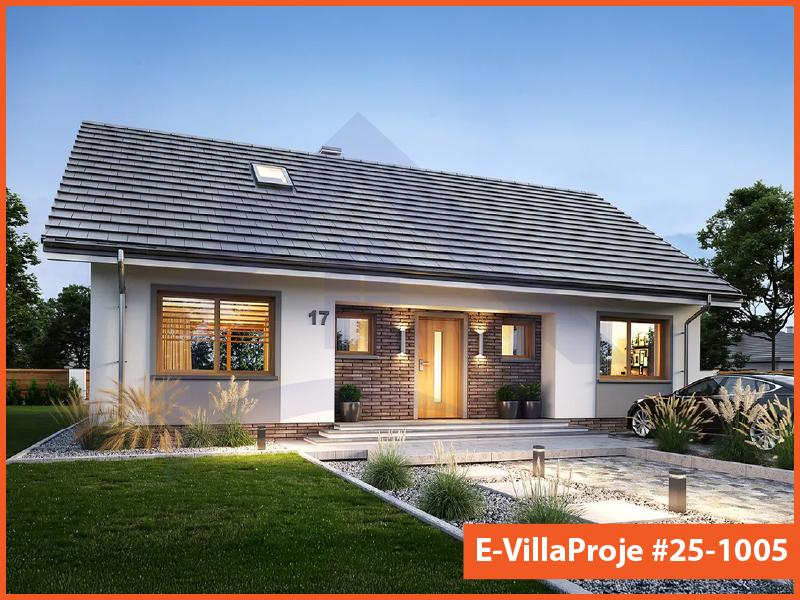
Model 25-1005 — 135 m², 1 storey

Model 25-1005 • 135 m²

Model 25-1005 — 135 m², 1 storey

1 Storey
3 Bedrooms
0 Garage

Frequently Asked Questions

Essential answers regarding steel construction, energy targets and project delivery.

An MVHR unit extracts warm, stale, humid air from bathrooms and kitchens (approx. 21°C) through a counterflow heat exchanger. It transfers up to 88-92% of that heat into incoming fresh outdoor air (even when outside is 0°C), warming it to roughly 18°C before distributing it silently to bedrooms and living rooms—without the air streams ever mixing. This eliminates 85%+ of traditional ventilation heat loss.

No. In a professionally engineered SerVilla system, the central unit is located in a utility room and equipped with acoustic attenuators. Duct air speeds are maintained under 2.0 m/s. The resulting sound level inside bedrooms is below 24 dB(A)—softer than a human whisper.

Because a passive home requires minuscule heating energy (max 15 kWh/m² annually), gas boilers are oversized and inefficient. An inverter air-to-water heat pump produces 4.5 kWh of heat for every 1 kWh of electricity consumed (SCOP >= 4.5). Combined with rooftop solar PV, heating and hot water costs are reduced to near-zero.

The intake F7 pollen filter and exhaust G4 dust filter are typically inspected twice a year and replaced annually. The unit automatically alerts homeowners when airflow resistance increases. This continuous filtration dramatically reduces household dust and provides complete relief for allergy and asthma sufferers.

No. All plumbing runs through factory-formed service holes fitted with rubberized anti-vibration grommets and acoustic lagging. Metal-to-metal contact is eliminated, preventing pipe-water acoustic transmission and abrasion.

Request a Project Quote

Prepare your project brief and connect directly with the SerVilla engineering team via WhatsApp.

Direct connection with SerVilla engineering desk.
ℹ️ How it works: Clicking opens a pre-composed project brief in WhatsApp. You review and send it yourself. No payment or financial data is collected.
Chat on WhatsApp